Viewing guide / 02 / Demonstration
Unpack the makeup clip
An impressive finish is a place to start asking questions, not a reason to stop. Read the technique before accepting the product verdict.
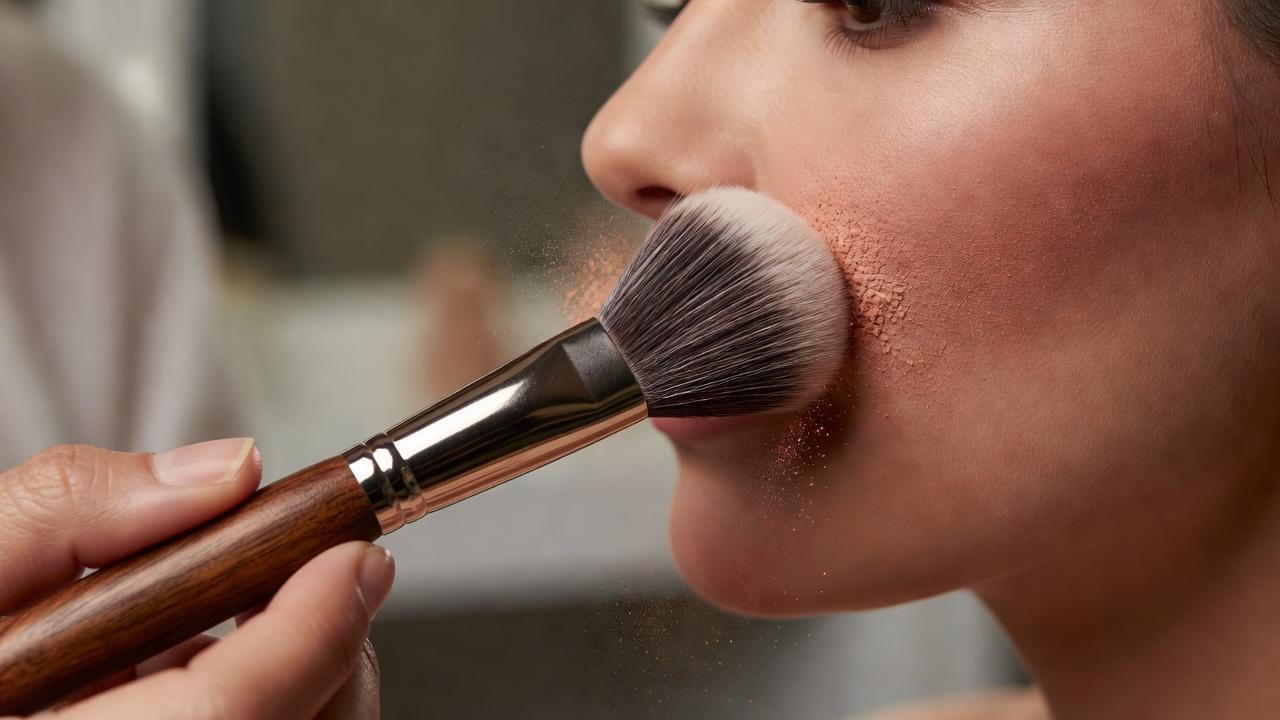
Define the actual claim
“This blush placement looks lifted” describes an appearance. “This foundation lasts all day” describes performance over time. “This ingredient treats acne” moves into a health-related claim. These statements need different kinds of support. A short video may demonstrate a color choice convincingly while showing nothing about wear or treatment. Start by translating enthusiastic language into a specific proposition that could be checked.
Trend labels such as latte makeup, strawberry makeup, glass skin and underpainting group recognizable visual ideas. They are not standardized formulas or quality certifications. Two creators can use the same label for different products and application orders. Focus on the visible elements: brown tones, blush placement, reflective finish or layers beneath foundation. The label helps you find a conversation; the method tells you what is happening.
Track the method, not just the bottle
A useful demonstration identifies preparation, amount, tool and placement. Watch whether the creator taps, sweeps, presses or buffs. Notice whether a sponge is described as damp and whether a base has time to settle before another layer. Product quantity is hard to estimate from a close crop, so avoid treating a quick squeeze or dot as a universal measurement. The camera angle can change your sense of scale.
Underpainting provides a good reading exercise. The general idea is to place elements such as contour or blush beneath a subsequent complexion layer, but results depend on coverage, texture and blending. A reveal cannot tell you which variable did the work unless the process makes those choices visible. The transferable lesson may be a lighter touch or a different application order, not a requirement to buy the featured products.
Claim: “One product changed the entire finish.”
Context: Was skin preparation also different? Were powder, setting spray, lighting or camera settings changed? A bundle of changes cannot isolate one cause.
Check what the light is doing
Soft frontal light can reduce the visibility of shadows cast by skin texture. A side light may make the same texture more obvious. Exposure and white balance affect perceived brightness and color, while camera processing and compression can alter fine detail. These mechanisms do not prove intentional manipulation. They explain why a before-and-after comparison is stronger when angle, distance and illumination remain comparable.
Do not use a polished face as a diagnostic test for a beauty filter. Some effects are labeled by the platform; labels and available information may vary. Even when an effect is identified, it may alter color rather than facial structure. State what you can see and what you cannot establish. “The lighting changes at the reveal” is a defensible observation. “Every pore was digitally removed” needs evidence the clip may not provide.
Interrogate wear and comparisons
A first impression records an initial response. It does not become a wear test because the caption says “obsessed.” A useful wear update describes elapsed time and relevant conditions, including touch-ups, activity and changes in environment. Even then, it remains one person’s experience. Skin type, preparation and application can produce different outcomes, and an apparent time stamp alone does not independently verify the intervening hours.
Split-face comparisons can help viewers see contrast, but the sides may differ in product amount, blending, preparation or natural skin condition. A branded product next to a lower-priced alternative is not automatically a controlled experiment. Brands such as Fenty Beauty, e.l.f. Cosmetics, Rare Beauty and Maybelline appear frequently in beauty discussion; their presence here is contextual, not a ranking or endorsement. Assess the demonstrated claim rather than assuming price or familiarity settles it.
Keep safety outside the hype cycle
Cosmetic enthusiasm is not medical advice. The US Food and Drug Administration explains that intended use helps distinguish cosmetics from drugs, and claims matter to that distinction. A creator’s comfortable experience does not establish safety for every viewer. Follow product labeling, avoid unapproved improvisation around sensitive areas and stop using a product if it causes a reaction. Seek appropriate professional advice for persistent or concerning symptoms.
The American Academy of Dermatology offers guidance on testing new skin-care products; a casual on-camera swatch is not equivalent to a medical allergy assessment. Do not share eye or lip products merely because a challenge normalizes it. Your final note can stay simple: what technique was visible, which conditions were stated and which conclusion remains unsupported. A compelling look and a cautious interpretation can coexist without taking the fun out of makeup.